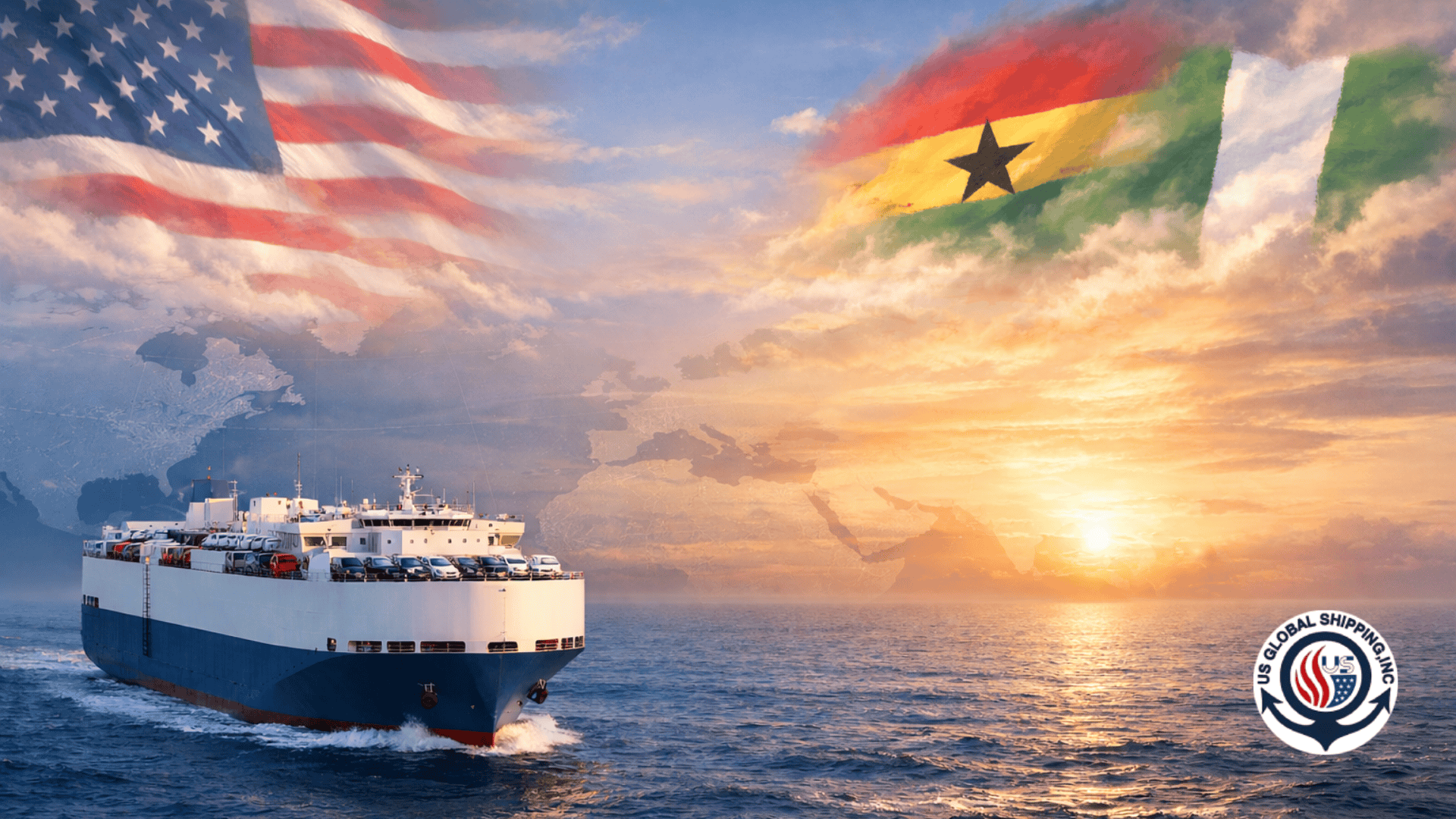
Shipping Cars from USA to West Africa: Your Complete Guide to Ghana, Nigeria, and Gulf of Guinea Ports in 2026
Shipping Cars from USA to West Africa: Your Complete Guide to Ghana, Nigeria, and Gulf of Guinea Ports in 2026
Introduction
West Africa has quietly become one of the fastest-growing destinations for used vehicle exports from the United States. Ghana and Nigeria together account for a significant share of U.S. auto exports to the African continent, driven by rising middle-class demand for affordable American vehicles and a well-established resale market at ports like Tema and Lagos.
For car dealers, private sellers, diaspora families, and fleet traders based in the United States, shipping a vehicle to West Africa is not simply a matter of booking ocean freight. It involves navigating country-specific import age limits, title documentation, port procedures, and carrier selection, all of which differ meaningfully between Ghana, Nigeria, and neighboring destinations.
US Global Shipping brings the same structured approach that has made it a trusted partner for Middle East auto exports to the West Africa trade lane, combining RORO and container options, warehouse staging, and documentation expertise to protect your shipment from origin port to discharge.
Why West Africa Is a High-Demand Destination for U.S. Vehicle Exports
West Africa is the largest regional importer of used American vehicles on the African continent. Demand is driven by several structural factors:
- A growing urban population with increasing vehicle ownership rates
- Limited domestic vehicle manufacturing, making imports the primary supply source
- Strong diaspora communities in the United States sending vehicles to family members
- Active dealer and resale networks in Accra, Lagos, and surrounding markets
- Competitive pricing on U.S. auction vehicles relative to local alternatives
Ghana and Nigeria are the two anchor markets, but the West Africa shipping corridor also serves Togo (Lomé), Benin (Cotonou), Senegal (Dakar), and Ivory Coast (Abidjan), all reachable through established RORO and container services departing from U.S. East and Gulf Coast ports.
Key Destination Ports for Car Shipping to West Africa
Ghana: Port of Tema
Tema is the primary port of entry for vehicles shipped to Ghana, located approximately 16 miles east of Accra. It is one of the busiest ports in West Africa and serves as a transshipment hub for landlocked countries including Mali, Niger, and Burkina Faso.
Ghana's customs regulations require that imported vehicles be no more than 10 years old to avoid significantly higher duty rates. Vehicles older than this threshold are still importable but attract penalties that can erode resale margins substantially. Proper title documentation, commercial invoices, and a Bill of Lading aligned with Ghana Revenue Authority (GRA) requirements are essential for smooth clearance.
Takoradi is a secondary port option for western Ghana, though the majority of vehicle import volume flows through Tema.
Nigeria: Port of Apapa and Tin Can Island (Lagos)
Nigeria processes vehicle imports through two primary Lagos ports. Apapa is the main container terminal handling FCL shipments. Tin Can Island handles RORO vehicle imports, making it the preferred discharge point for dealers shipping operational vehicles roll-on, roll-off.
Nigeria's vehicle age restriction permits imports of vehicles up to 15 years old, giving U.S. exporters wider inventory flexibility compared to Ghana. Documentation requirements include original title, commercial invoice, bill of lading, and compliance with the Standards Organisation of Nigeria (SON) import procedures.
Port Harcourt serves as an additional discharge point, primarily for cargo destined for Rivers State and the Niger Delta region.
Shipping Options: RORO vs. Container for West Africa
RORO Shipping
Roll-on Roll-off is the most cost-efficient method for shipping operational vehicles to West Africa. Vehicles are driven directly onto the vessel at the U.S. origin port and driven off at the destination. There is no containerization cost, no loading into a box, and no need for block-and-brace materials. RORO is the standard for high-volume West Africa auto exports because it reduces per-unit cost and simplifies handling.
Container Shipping
Container shipping is preferred for high-value vehicles, vehicles with modifications, or when combining a vehicle with household goods or commercial cargo. A standard 40-foot container can carry four standard sedans or SUVs, spreading the ocean freight cost across multiple units. US Global Shipping's warehouse network in New York, Savannah, Houston, California, and Greensboro enables efficient container loading and consolidation prior to vessel departure.
LCL (Less Than Container Load)
For individual vehicle owners or small exporters who do not have enough cargo to justify a full container, LCL consolidation provides a cost-effective alternative. Your vehicle or cargo is combined with other shipments heading to the same destination, and you pay only for the space your cargo occupies.
Why US Global Shipping Is Your West Africa Logistics Partner
US Global Shipping is based in Greensboro, North Carolina, and operates through a strategic U.S. warehouse network that positions vehicles and cargo efficiently for West Africa-bound sailings from East Coast and Gulf Coast ports.
Auction Vehicle Export Expertise
A significant share of vehicles shipped to West Africa originate from U.S. auto auctions including Copart, IAAI, Manheim, and ADESA. US Global Shipping's USA Auction Access program simplifies the process of purchasing auction vehicles and moving them directly into the export pipeline, from auction yard to vessel.
Inland Transportation Coordination
Moving a vehicle from an auction yard or private location to a U.S. port requires coordinated inland transportation. US Global Shipping manages the full drayage and staging process, ensuring vehicles arrive at the port yard ahead of vessel cutoffs without unnecessary terminal storage accumulation.
Documentation Preparation
West Africa shipments require precise documentation. Missing or incorrect paperwork causes vessel cutoff failures, port holds, and costly demurrage at destination. US Global Shipping pre-verifies titles, VINs, commercial invoices, and export documentation before cargo reaches the port, the same structured approach described in the guide on operational risks in high-volume auto export that applies equally to West Africa trade lanes.
Real-Time Shipment Tracking
US Global Shipping provides a dedicated tracking application offering visibility from warehouse receipt through destination port arrival. Dealers, private buyers, and diaspora shippers can monitor vehicle status at every milestone without repeated status calls.
Expert Team Support
The US Global Shipping team provides hands-on coordination across time zones. Whether you need documentation guidance, vessel schedule updates, or destination port advice, direct specialist access is available. Learn more about the team and their logistics experience.
Documentation Requirements for Shipping Cars from USA to West Africa
Documentation requirements vary by destination, but the following are standard across Ghana and Nigeria shipments:
- Original vehicle title, clear of liens, in the exporter's name
- Commercial invoice stating vehicle details, purchase price, and parties
- Bill of Lading issued by the ocean carrier upon vessel loading
- Export declaration filed through the Automated Export System (AES)
- Proof of ownership or dealer documentation for auction purchases
- Destination-specific import permits where required (Nigeria SON compliance)
What Determines the Cost of Shipping a Car from USA to Ghana or Nigeria?
Several factors influence total landed cost for West Africa vehicle shipments:
- Origin port: New York/Newark, Savannah, Houston, and Baltimore all serve West Africa lanes with different transit times and carrier options
- Shipping method: RORO is typically more cost-efficient per unit than containerization for operational vehicles
- Vehicle size and weight: larger vehicles occupy more RORO deck space or container volume
- Destination port: Tema and Lagos have different port handling fees
- Documentation and compliance services: pre-verification and export filing fees
- Inland transportation: drayage from auction yard or seller location to origin port
How to Get Started
Starting your West Africa vehicle export is straightforward. Visit the US Global Shipping website to review service options, or go directly to the free consultation page to connect with a specialist. Provide your vehicle details, origin location, destination port, and target sailing date. You can also explore the full US Global Shipping blog for related guides on international auto export logistics.
Ready to Ship Your Car from the USA to West Africa?
West Africa's demand for U.S. vehicles continues to grow in 2026, supported by established resale networks in Accra and Lagos and a diaspora community actively sending vehicles home from the United States. Contact US Global Shipping today to plan your West Africa vehicle shipment.