Savannah to Jebel Ali: The Real System Behind High Volume US Auto Exports
There is a difference between shipping one car and exporting hundreds.
Anyone can move a vehicle.
Very few can manage high-volume auto exports from Savannah to Jebel Ali without delays, storage penalties, documentation issues, or port chaos.
This is where structure separates professionals from opportunists.
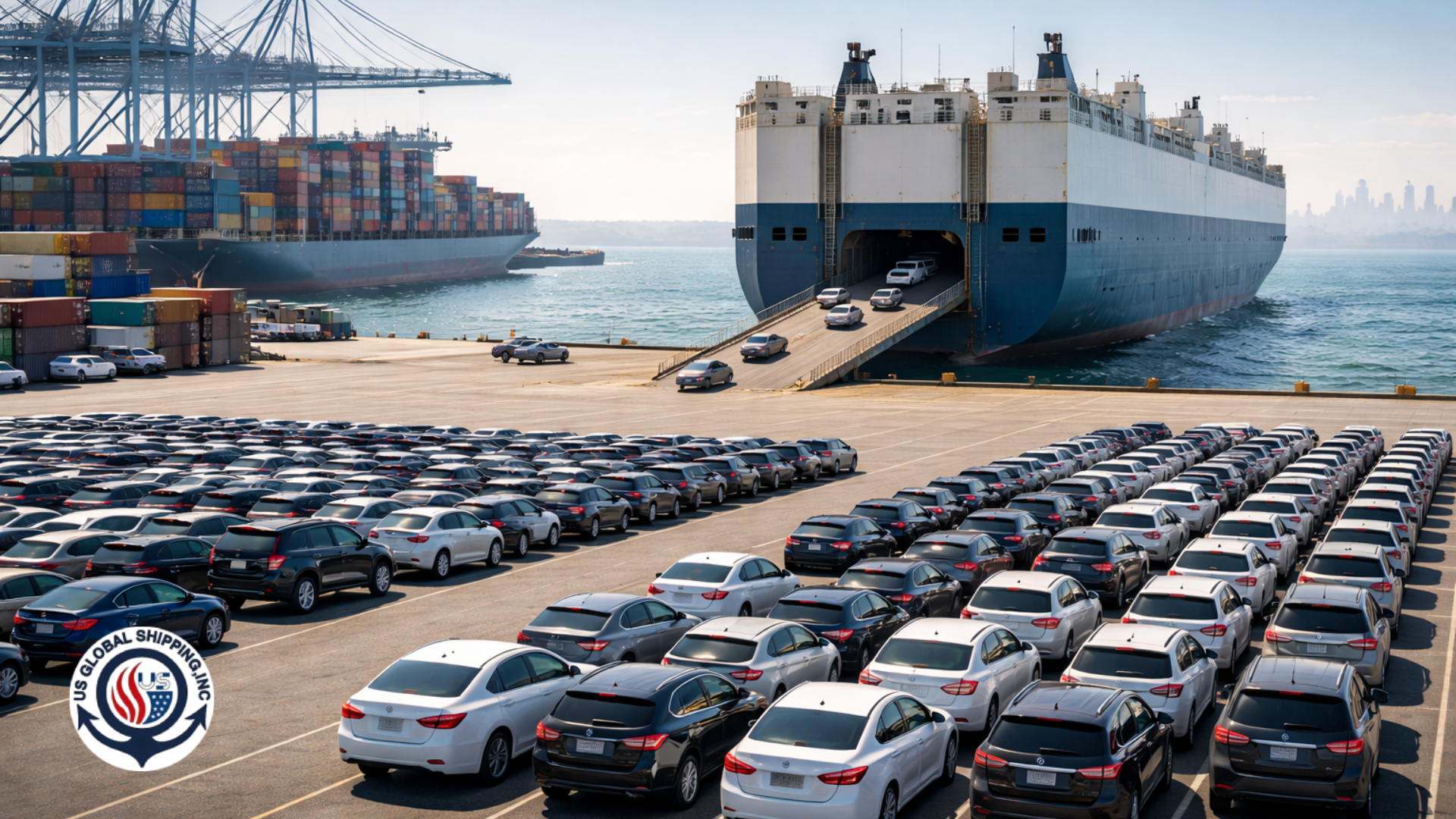
Savannah is one of America's most important vehicle export gateways and Jebel Ali is the Middle East's most strategic automotive import hub.
Between these two ports sits a system that must be engineered with discipline and foresight.
Why Savannah Remains a Power Port for Auto Exports
The Port of Savannah plays a central role in US vehicle exports.
It offers:
- Strong ocean carrier connectivity
- Established RoRo and container flows
- Efficient access from major inland auction locations
- Consistent Middle East routing options
For exporters moving auction cars, dealer inventory, or fleet units, Savannah delivers scale and scheduling reliability.
But the port alone doesn't guarantee success. The system behind it does.
The Process Begins at the Auction Yard, Not the Port
High volume exports typically originate from:
- Copart
- IAAI
- Dealer inventories
- Fleet liquidations
The common mistake inexperienced exporters make is assuming logistics begins at the port.
It does not. It begins the moment a vehicle is won.
At that point:
- Storage clocks begin
- Title timelines influence clearance
- Inland transport planning becomes urgent
US Global Shipping integrates pickup planning immediately after acquisition. Not later. Not reactively.
Because in high volume operations, small delays compound quickly.
Inland Transport Is Where Volume Either Flows or Breaks
When moving dozens or hundreds of vehicles toward Savannah, coordination must be exact.
Each unit may be:
- Running
- Non-running
- Require flatbed transport
- Need winch handling
- Have documentation still in processing
If inland transport isn't structured, you get:
- Vehicles arriving too early at port
- Vehicles missing cutoff windows
- Title mismatches
- Storage charges stacking up
High-volume exporters solve this by staging vehicles strategically.
US Global Shipping supports:
- Auction yard pickups
- Coordinated inland transportation
- Controlled staging when necessary
This allows documentation and physical movement to stay synchronized.
Documentation Sequencing Before Port Exposure
Exporting vehicles from the USA requires:
- Original title
- Bill of sale
- Export filing (AES/EEI)
- Clearance approval
In small shipments, documentation errors are frustrating.
In large shipments, they are catastrophic.
One delayed title can hold an entire batch.
The blueprint approach ensures:
- Documentation is reviewed before port delivery
- Export filings are aligned with sailing schedules
- No vehicle reaches Savannah prematurely
US Global Shipping structures export compliance alongside physical logistics.
Because we understand that a port is not a storage yard. It's a transit gate.
RoRo and Container Strategy in High Volume Exports
From Savannah to Jebel Ali, exporters typically deploy two methods.
RoRo shipping is ideal for running vehicles and large scale movement. It offers efficiency and streamlined port handling.
Container shipping is suited for non-running, high value, salvage, or specialty vehicles that require additional protection and control.
High volume exporters do not randomly assign methods.
They segment cargo based on condition, value, and market destination.
US Global Shipping provides both RoRo and container solutions, allowing shipment architecture instead of forcing cargo into a fixed model.
That flexibility protects both cost and timeline.
Port Discipline at Savannah
Savannah operates on structured port schedules.
High-volume exporters manage:
- Receiving windows
- Documentation cutoffs
- Booking confirmations
- Vessel space allocation
- Load sequencing
Without discipline, even booked cargo can miss sailing.
High-volume operators:
- Deliver in planned waves
- Avoid terminal congestion
- Maintain documentation accuracy
- Monitor sailing changes
This is where operational experience becomes visible.
The port rewards preparation and penalizes improvisation.
Arrival at Jebel Ali Is Only Half the Story
Jebel Ali functions as the automotive nerve center of the Middle East.
Upon arrival:
- Customs clearance begins
- Duty and VAT are assessed
- Inspection procedures are initiated
- Release timelines start
Exporters serving UAE, Saudi Arabia, Qatar, and Jordan understand that this is a regional ecosystem.
Savannah to Jebel Ali is not a single transaction. It is a trade lane relationship.
US Global Shipping aligns US export planning with Middle East arrival expectations to ensure continuity from ocean discharge to final release.
A Strategic Advantage Now Available From Savannah
For exporters currently moving volume through Savannah, there is an additional advantage.
US Global Shipping is presently offering special container rates from Savannah to key Middle East destinations including Jebel Ali, Aqaba, and Mersin.
This creates a cost controlled window for high volume exporters seeking margin protection.
Opportunities like this are not permanent. They are market driven and schedule dependent.
Exporters who plan early benefit most.
The Real Difference Between Small Shippers v/s High-Volume Operators
Small-scale exporters react. High-volume exporters anticipate and plan accordingly.
They:
- Schedule pickups before storage charges begin
- Stage vehicles before documentation delays happen
- Allocate RoRo vs container based on condition
- Manage inland and port movement as one system
- Communicate clearly with importers before issues escalate
That's the blueprint. And that's what builds trust.
Why Savannah to Jebel Ali Continues to Lead US Auto Export Growth
The US–Middle East automotive trade continues to thrive because:
- US auctions provide scale
- Middle East markets demand variety
- Savannah provides port efficiency
- Jebel Ali provides structured import infrastructure
But scale without structure creates risk. Success in this corridor is not about speed alone. It is about synchronization.
Auction acquisition.
Inland logistics.
Documentation control.
Port scheduling.
Ocean routing.
Arrival coordination.
When these layers move together, volume becomes manageable. When they don't, volume becomes a liability.
Ready to Move From Planning to Execution?
High-volume auto exports demand structure, not guesswork.
If you are shipping vehicles from Savannah to Jebel Ali or anywhere across the Middle East, now is the time to secure your routing and lock in current rates.
Speak with our experts and structure your next export shipment with clarity and control.